Filmmaking 2.0: How accessible equipment & knowledge is shaking up the market
Lecture by Marian Hirschfeld (HAMBURG OPEN 2026)
Filmmaking has never been as accessible as it is today: cameras, sound, lighting, post-production and, above all, knowledge have not only improved in recent years, but have also become much more affordable. This was the subject of Marian Hirschfeld's presentation "Filmmaking 2.0" at the Hamburg Open 2026. And what this development means for beginners, professionals and the market as a whole.


About Marian Hirschfeld
Marian Hirschfeld is a filmmaker from Cologne, grew up self-taught (early YouTube phase) and has been self-employed full-time since 2017. He accompanies productions from pre-production to directing/camera to editing and has been working closely with Nikon for years - both in campaigns and as a presenter on the Nikon Germany channel.
1) The new reality: the cine look is no longer an unattainable dream
Marian starts with a look back: When he started out, the early DSLR video days were just about the point where "cinematic" first became more affordable - true cine cameras were simply out of reach for many. Today, this boundary is shifting massively: professional features and high-quality codecs are migrating downwards to more compact, more affordable systems.
He draws a parallel with photography: top image quality has long been "democratized" there - in video, development is catching up fast. At the same time, he notes that we have long since reached a practical sweet spot for resolution (4K/6K/8K) in many areas: production is often higher, but in the end it is still usually delivered in 4K or lower.
2) Nikon ZR as an example: compact, but "big" image
Marian cites the Nikon ZR as a concrete example of this phase because it combines features that would hardly have been expected in this size and price range a few years ago:
- Shooting in RED RAW / REDLOG (look & grading behavior closer to classic cine workflows)
- 6K up to 60p
- 32-bit float audio internally
- a large 4-inch display that facilitates mobile working without additional rigging
The "world connection" of Nikon and RED DNA is also exciting for him - precisely because he knows both from practical experience (he also uses RED for larger productions).
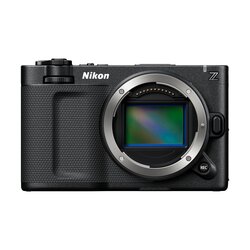
Nikon ZR Body
- 6K full-frame sensor. Up to 6K/60p recording directly in the camera
- Proven RED-colour science
- 4-inch, tilt and rotatable touchscreen monitor, 1000 nits bright
- Dual-base ISO of 800/6400
- 32-bit internal camera float audio recording
- Cinema-ready video modes and custom RED Picture Controls
- Fast, intelligent autofocus
- Integrated image stabilization: blur-free shots in five axes
- Lightweight and robust, fully sealed against weather influences
- Expandable: The equipment can be expanded at any time with the extensive range of accessories from Nikon and partner brands
3) Accessories revolution: more choice, less cost, more features
A large block of the presentation is not about cameras, but about what is often just as crucial on set: accessories.
Sound: radio links are his prime example. Where a lot of money used to be spent on "signal from A to B", today (depending on the set) you can get features such as internal recording, display level control, integrated mics and flexible lavalier options for a much lower budget - with strong competition between manufacturers.
Light: LED has (in his view) triggered a real revolution: low power, low heat, now lots of output - plus bicolor, RGB, daylight, Bowens mount compatibility and battery-powered setups in all sizes.
4) Today, post-production is (almost) no longer a cost issue
The entry hurdle for editing has also shifted drastically:
- DaVinci Resolve as a free standard version
- powerful entry-level laptops on which 4K workflows run realistically
- integrated audio tools and color grading, which has an extremely strong position in the industry
The point is clear: if you want to get started today, you are much less likely to fail due to pure license or hardware costs.
5) What does a "professional" start really cost?
In the lecture, Marian roughly estimated what a setup costs if you don't want to "just try it out" but want to work more professionally - including camera/lens, radio link, storage/cage and a powerful LED light (& Davinci Resolve: free of charge).
Result: around €3,861 gross (depending on the combination). His key message: In some systems, you don't even get the camera body for comparable money - here, on the other hand, you get a complete package that works.
6) The catch with "everything is possible": excessive demands due to options
As technology becomes more democratic, it also becomes more complex - at least in the menu. Marian talks openly about how quickly beginners (or those switching from the photo sector) can be overwhelmed by codec/log/bit depth/frame rate options: RED RAW, N-RAW, ProRes, H.265/H.264; REDLOG, N-Log, Rec709, HLG; 10/12 bit and much more. A lot of choice is good - but also a lot.
Workshop: Professional filming
Do the terms RAW, LOG or H.265 mean nothing to you or do you want to refresh your basic knowledge of filmmaking? No problem! Marian covered all these topics (and many more) in our three-hour workshop.
You can find a summary, the recording of the workshop and a detailed overview of the topics in our blog post.
To the workshop
7) YouTube as a film school: a game changer - with side effects
His view of knowledge is pleasantly differentiated: YouTube is a huge lever for him because content is freely available, application-oriented and often extremely up-to-date (firmware update ? same day tutorials). At the same time, he mentions the downside: contradictions, half-knowledge, "reach does not equal competence" - and the basics are sometimes neglected. As an example, he mentions the topic of gamma shift (especially on the Mac), where he himself has experienced contradictory explanations.
His pragmatic tip: make heavy use of YouTube - but plan a workshop (digital or face-to-face) for the basics and above all: practice, practice, practice.
8) Practical example Uganda: Shooting a documentary with a small setup
Finally, it gets concrete: Marian was in Uganda on business and shot a documentary about Skate Aid - with a deliberately compact setup in a small bag (camera, lenses, batteries, radio links, mic). His learning: less rig = less stress, more mobility, easier access to people (especially in documentary situations). And still no major image compromises, because he was very happy with the REDLOG/grading behavior - especially with highlight/shadow roll-off and the overall "RED-closer" look.
9) When technology is no longer the difference: what is "professional" today?
One of the strongest questions of the lecture: If (almost) anyone* can have a good camera - how do you recognize professionalism?
Marian mentions several factors:
- Workflow & data handling (clean backups, order, reliability)
- Sound and color management (making good technical decisions)
- predictably good results (experience & reliability)
- Creativity & storytelling (stand out through content, not just gear)
- Dealing with people/customers (respectful, professional, understanding wishes)
And yes: the flip side of democratization is also greater competition and a market in which attention sometimes counts more than quality. This makes craftsmanship, attitude and a clean way of working all the more important.
Conclusion: Filmmaking has never been more accessible - but that's exactly why the craft counts
The lecture is encouraging: never before has it been so realistic to produce high-quality films on a manageable budget. At the same time, this is not a free ride - if you want to survive in the long term, you need to rely not only on technology, but also on workflow, practice, creativity and a professional appearance.